Nucleus: Rebuilding the Backbone of Ask Media Group's Revenue Platform
A UX case study on transforming a legacy SEM tool into a scalable, multi-product design system

Overview
Product: Nucleus: Ask Media Group's internal SaaS platform for SEM and Content Marketing Role:
Lead UX Design Team: 1 UX Designer (visual design), 1 UX Researcher, reporting into Product & Engineering
Scope: Design system, information architecture, dashboard UX, agency-facing tools
The Problem
Nucleus had grown up around an aging product with almost no UX involvement. It had been built to serve a single function — SEM — but the business was moving faster than the tool. As Ask Media Group expanded into paid content marketing, the platform was being asked to do far more than it was ever designed for.
I brought in a UX team and led a top-to-bottom audit of the application. Through user research and stakeholder interviews, a clear picture emerged:
Inconsistent UI patterns across the product, the result of years of ad hoc feature additions with no shared design language
No scalable foundation — every new feature meant designing (and coding) from scratch rather than reusing established patterns
Fragmented navigation that hadn't been rethought as the product's scope grew from one revenue stream to two
A brand and visual identity that no longer reflected the platform's role as core business infrastructure
In short: Nucleus needed more than a visual refresh. It needed a foundation that could grow with the business.
Research & Discovery
Before touching any screens, the team focused on understanding the why behind the friction:
Stakeholder interviews with internal teams and agency partners to surface pain points and workflow gaps
Application audit cataloguing every existing feature, identifying its purpose, and flagging usability issues
Goal-mapping for each feature area, connecting day-to-day tasks back to underlying business objectives
This audit became the evidence base for prioritization — it made clear which problems were cosmetic and which were structural, and it gave the team a shared, defensible rationale for the rebuild.
The Solution
Rather than patch individual screens, the team rebuilt Nucleus from the foundation up.
A design system built to scale
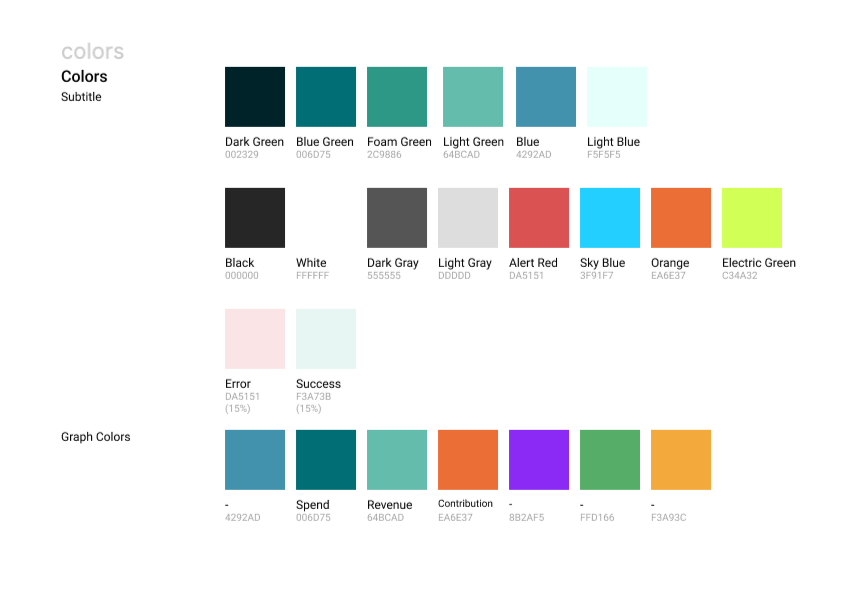
The first step was a consistent style guide — quickly outgrown and replaced by a full atomic design system. This included new branding, a refreshed color palette, and standardized typography, giving every future feature a shared visual and structural language instead of a one-off build.Restructured navigation and information architecture
With the platform now serving two distinct revenue streams (SEM and Paid Content Marketing) as well as external agency users, navigation needed to flex without becoming confusing. The team remapped the sitemap and redesigned the nav structure so each product area felt coherent on its own while still living under one platform.Purpose-built dashboards for each revenue stream
Rather than force SEM and Paid Content Marketing into the same views, the team designed dedicated dashboards for each, reflecting the different metrics, workflows, and priorities of each business line while sharing the same underlying component system.
My Process
As lead UX designer, my responsibilities spanned strategy, execution oversight, and cross-functional collaboration:
Set research direction — shaped the strategy and provided feedback so the UX team could design and run a proper user research plan
Audited the existing application — identified goals, pain points, and issues feature by feature
Built the new design system — established branding, color palette, and sitemap as the foundation for everything downstream
Partnered with product and engineering — worked through logic and functionality for both existing and net-new features
Guided the design team — reviewed and iterated on mocks and prototypes before they moved into build
Supported engineering through build-out — stayed engaged post-handoff to keep implementation aligned with design intent
This wasn't a one-and-done redesign, it was set up as a phased roadmap. The initial rework of user flow and navigation addressed the most urgent needs, with two additional phases scoped around longer-term business needs.
Outcomes
Replaced years of inconsistent, one-off UI with a scalable atomic design system used across both revenue streams
Enabled the Paid Content Marketing product line to launch on a shared foundation instead of a parallel one-off build
Gave product and engineering a common design language, speeding up how quickly new features could move from concept to build
Established a phased roadmap so future improvements could be prioritized against real business needs rather than built reactively
Note: Nucleus is a proprietary internal platform, so some detail here is necessarily high-level. Further examples of the UX work are available on request.
Reflection
The core lesson, when a product has outgrown its foundation, the fix isn't a new coat of paint, it's a new foundation. Investing early in a design system and a clear information architecture paid off well beyond the initial redesign, giving the business a platform that could absorb a whole new product line (Paid Content Marketing) without starting from scratch.